

Anxiety counselling Perth
Anxiety and anxiety disorders
At our clinics, we understand anxieties impact and offer a compassionate environment to explore, identify triggers, and develop tools to manage and reduce it.
Personalized treatment plans use proven therapies like cognitive-behavioural therapy, mindfulness, and relaxation to meet your unique needs. Whether you have general anxiety, panic attacks, social anxiety, or situational stress, we'll guide you through every step. Anxiety doesn't have to control your life. We'll empower you with strategies to build resilience, restore balance, and gain a deeper understanding of your emotions. Our goal is to help you find lasting relief and the skills to thrive confidently in any situation. Let's work together to create a calmer, more fulfilling future for you.
Next Steps
You may have been searching for 'anxiety counselling' or 'anxiety treatment' in Perth. This is a good first step to learn more about anxiety. When you feel ready, you can talk to your doctor and/or one of our psychologists who are experts in helping people manage anxiety and gain control over these feelings. Click on the BOOK NOW call back for an intake interview and we can help you with what you need.
Masters Psychology have clinics in the Perth region at Wangara, Como, Albany in the great southern of Western Australia

resources for sale

As a clinical psychologist, Rochelle Masters has a special interest in educating parents and caregivers of children. Anxiety is a general term, and can manifest in various ways having a significant impact on a child's overall wellbeing, academic performance, and social relationships.
Anxiety is a normal human emotion that helps us identify and respond to potential threats or dangers. However, excessive anxiety that interferes with a child's daily activities can be a cause for concern. Anxiety disorders are the most common mental health disorder among children, affecting approximately 1 in 8 children. Common anxiety disorders can include specific phobias, social anxiety disorder, generalised anxiety disorder, and separation anxiety disorder. Children with anxiety may display various warning signs and symptoms, such as excessive worrying, restlessness, difficulty sleeping, irritability, fatigue, and physical symptoms such as headaches, stomach aches, or nausea. Additionally, children with anxiety may have difficulty concentrating or making decisions, and may avoid social situations or activities they once enjoyed. It is important for parents and caregivers to be aware of the warning signs and symptoms of anxiety, as early intervention and treatment can significantly improve a child's overall wellbeing and quality of life.
In this eBook, we will explore practical strategies and techniques for parents and caregivers that have been purported to help children manage anxiety effectively. By better understanding the warning signs and symptoms of anxiety, parents and caregivers can assist children develop the necessary coping skills to navigate and overcome anxiety, leading to a happier and healthier life.
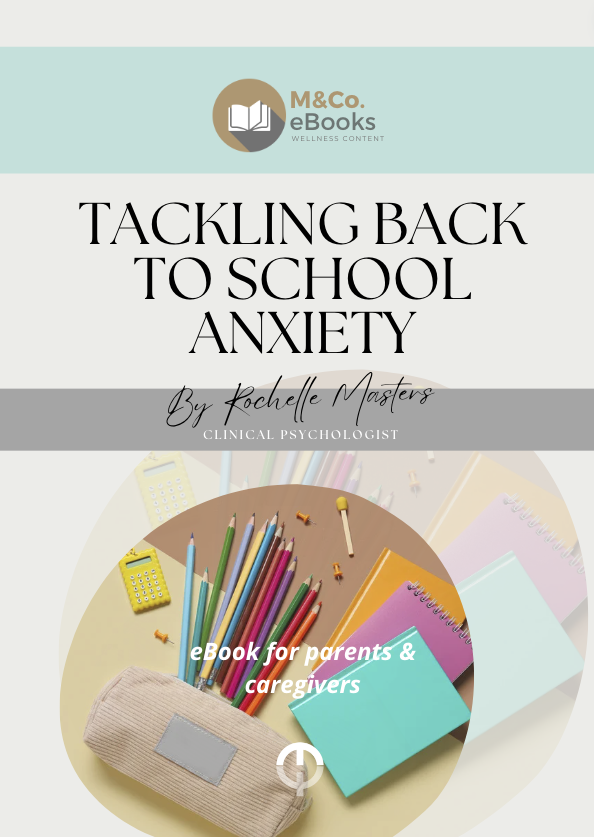
Welcome to the Tackling Back-to-School Anxiety eBook, where you can take learn the strategies, tips and tricks we found that may assist to manage your child’s worries about going back to school (and perhaps even some of your own). Inside you will find outlined, easy to digest, information and practical activities to share with your child to help manage this transition. We hope this serves you and your child well in learning to better tackle back-to-school worries, making returning to school a positive experience.
Inside you will find information on:
1. What is normal anxiety?
2. Recognising when things get worse
3. Is it just situational?
4. The warning signs associated with back-to-school anxiety
5. Are you modelling anxious behaviour?
6. 10 Tips n' Tricks (strategies and interactive activities to do with your child)
7. How to use the information we’ve provided and when, where and how to seek
further assistance.
2 for 1 OFFER when you purchase the School Anxiety eBook.
Receive free when you add this eBook to your cart - Tackling Anxiety in Kids eBook - then add this CODE - ANXIETY100 at the checkout. See the sample cart on page.
Some more info below
ANXIETY
Everyone feels anxious from time to time. When anxious feelings don't go away, happen without any particular reason or make it hard to cope with daily life it may be the sign of an anxiety condition.
Anxiety conditions affect 1 in 4 people in Australia and they are treatable.
What is anxiety?
Anxiety is more than just feeling stressed or worried. Stress and anxious feelings are a common response when we feel under pressure. These feelings usually pass once the stressful situation has passed.
Anxiety is when anxious feelings don’t go away and may not have a clear cause. If you’re living with anxiety, the anxious feelings may not be easily managed. Anxiety is a serious condition that makes it hard for a person to cope with daily life.
3 million Australians are living with anxiety. Anxiety is the most common mental health condition in Australia. 1 in 4 people will experience anxiety at some stage in their life.
Anxiety signs & symptoms
Anxiety symptoms can develop over time. Because we all experience anxious feelings, it can be hard to know when to seek support.
Signs and symptoms of anxiety can include:
feeling very worried or anxious most of the time
finding it difficult to calm down
unable to control your anxious thoughts or worries
feeling tired easily
difficulty concentrating or mind going blank
muscle tension
sleep disturbances.
The most common anxiety problems and anxiety disorders are:
Panic disorder and agoraphobia
Social anxiety (previously termed social phobia)
Specific phobias
Generalised anxiety disorder (GAD)
Obsessive-compulsive disorder (OCD)
Post-traumatic stress disorder (PTSD)
Stress

Treatments for anxiety
There’s a wide range of evidence-based psychological and medical treatments for anxiety conditions. Some treatments work better for certain types of anxiety conditions.
You can work with your mental health professional to find the most effective treatments for you. You might need to try a few different ones before you find one or more which work for you.
Behaviour therapy
Behaviour therapy is used in CBT. It focuses on encouraging activities that ar e rewarding, pleasant or give a sense of satisfaction. This helps to reverse the patterns of avoidance and worry that make anxiety worse.
Cognitive behaviour therapy (CBT)
CBT is a structured psychological treatment which recognises that the way we think (cognition) and act (behaviour) affects the way we feel.
Eye movement desensitization and reprocessing (EMDR)
EMDR is a recommended treatment for post-traumatic stress disorder (PTSD). There isn’t enough evidence at the moment to say whether it works for other types of anxiety.
Antidepressants for anxiety
Some types of antidepressant medication can help manage anxiety, even if you don’t have depression.
When you have an anxiety condition your brain's chemicals can become unbalanced, including serotonin, noradrenaline and dopamine. Antidepressant medication can fix these chemical imbalances.
Online therapies
If you have mild or moderate anxiety, online therapies can be just as effective as face-to-face services. They’re sometimes known as e-therapies or computer-aided psychological therapy.
Most online therapies follow the same principles as CBT or behaviour therapy.
You work through the program by yourself, usually with some support from a therapist. The therapist will help you apply what you’ve learned to your own life. You might talk to them on the phone, by email, text, or instant messaging.